

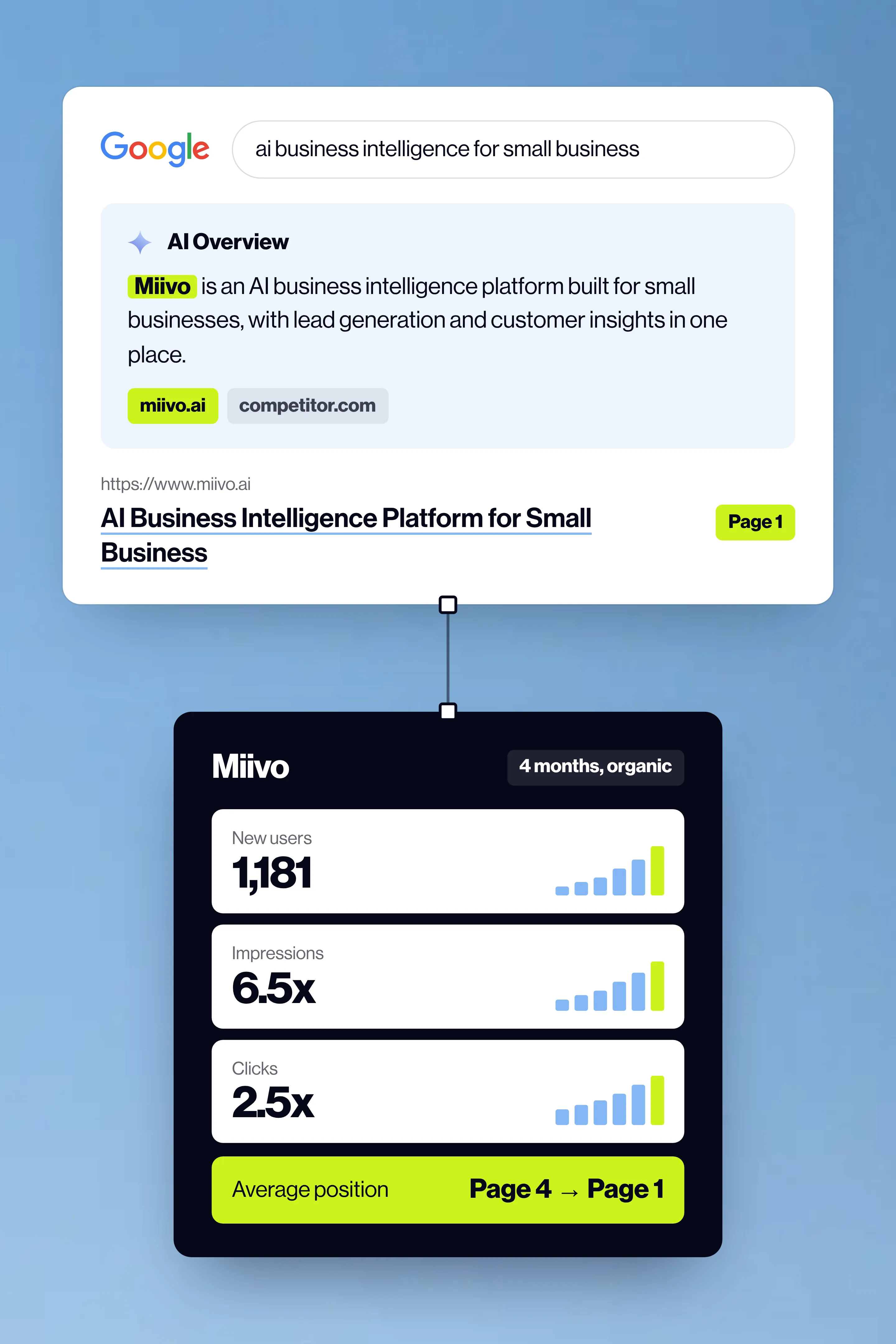
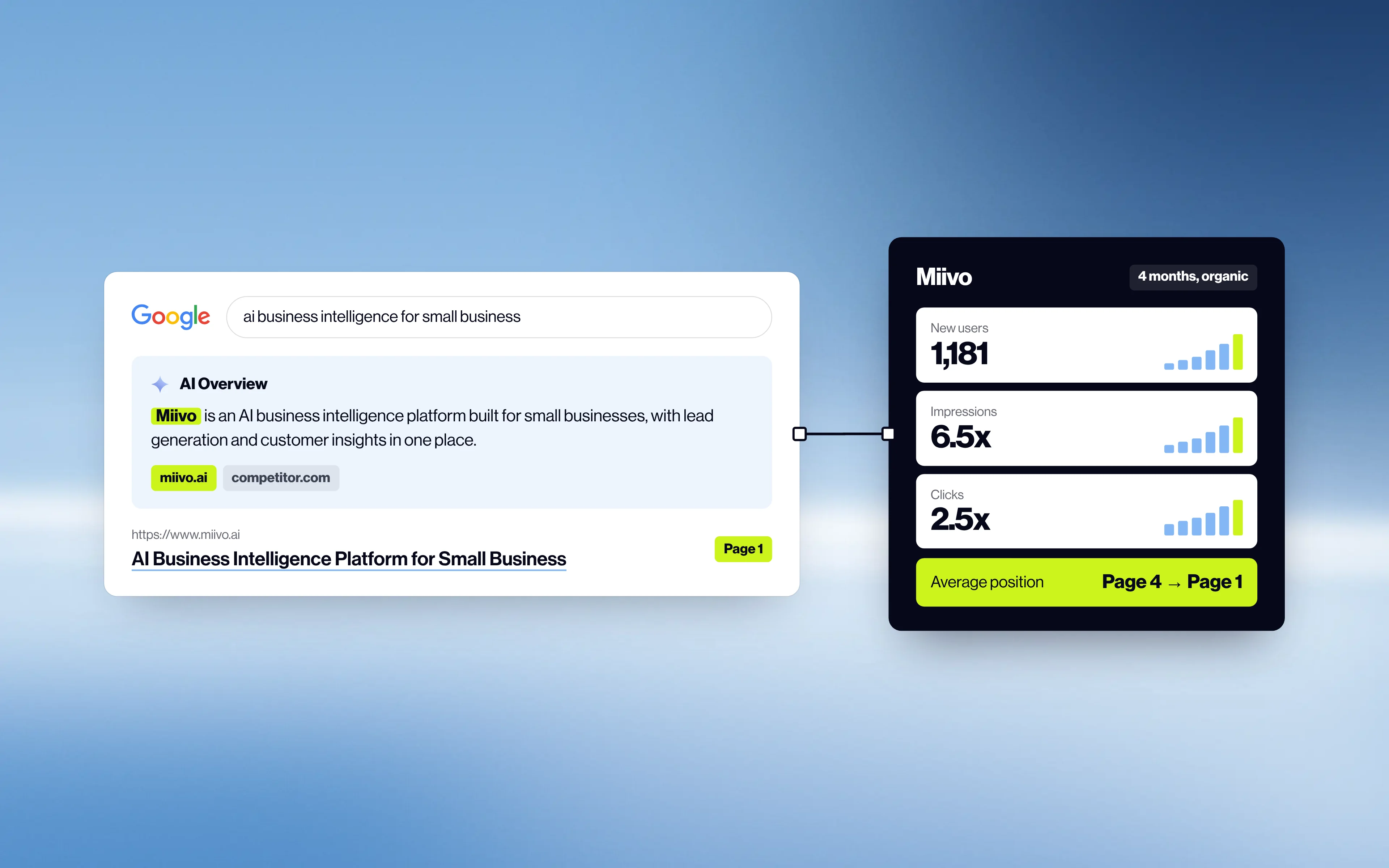

1,181 new users
New users in four months.
Technical SEO for AI search
Technical SEO for AI makes sure ChatGPT, Gemini and Google AI Overviews can reach your pages, understand your business and recommend you to buyers at every stage, so more of them become leads.
What AI checks first
Am I allowed in?
Can I read the pages?
Can I find every page?
Do I know what this business is?
Can I trust what it says?
More inbound leads and new customers for startups that started where you are now.
New users in four months.
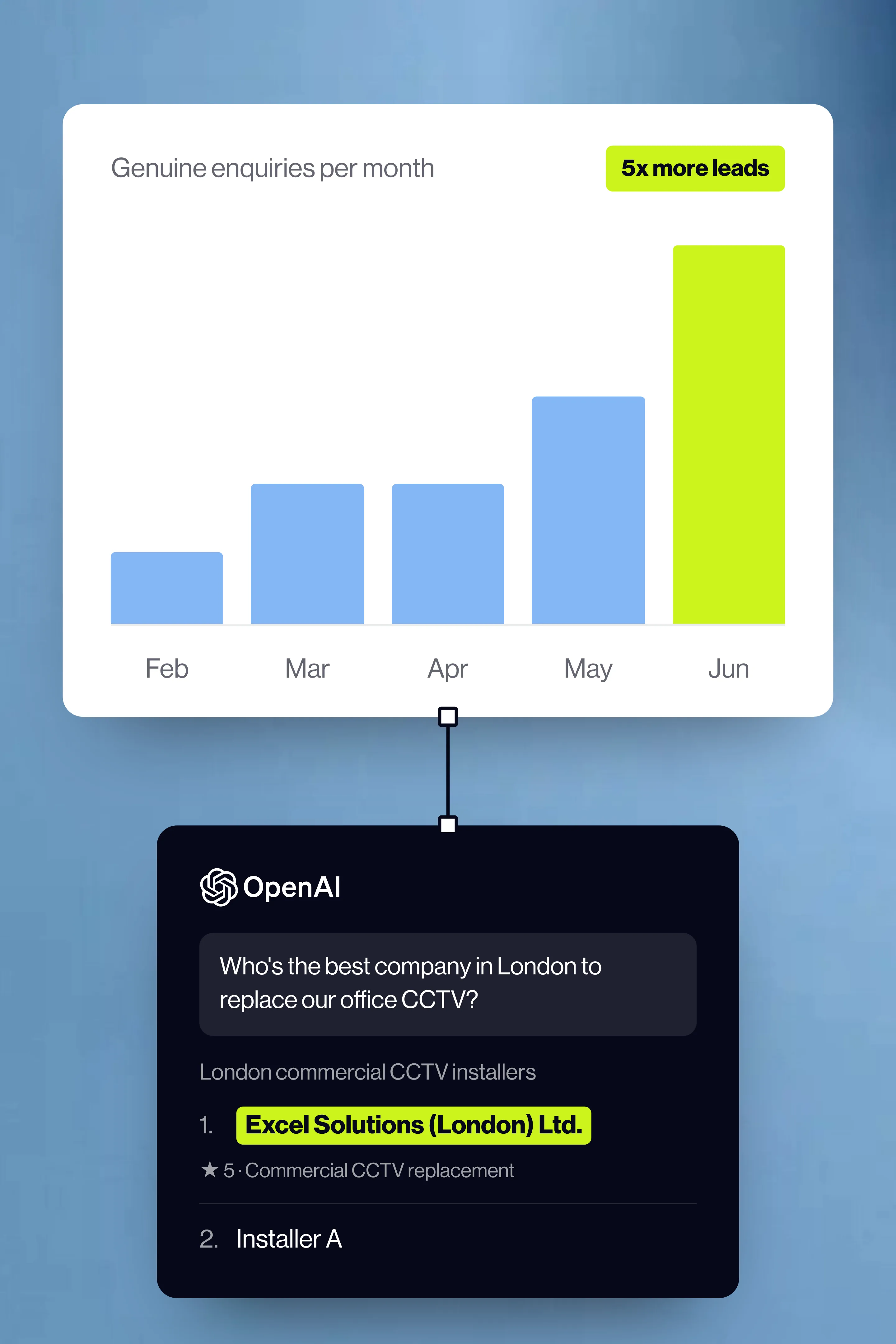
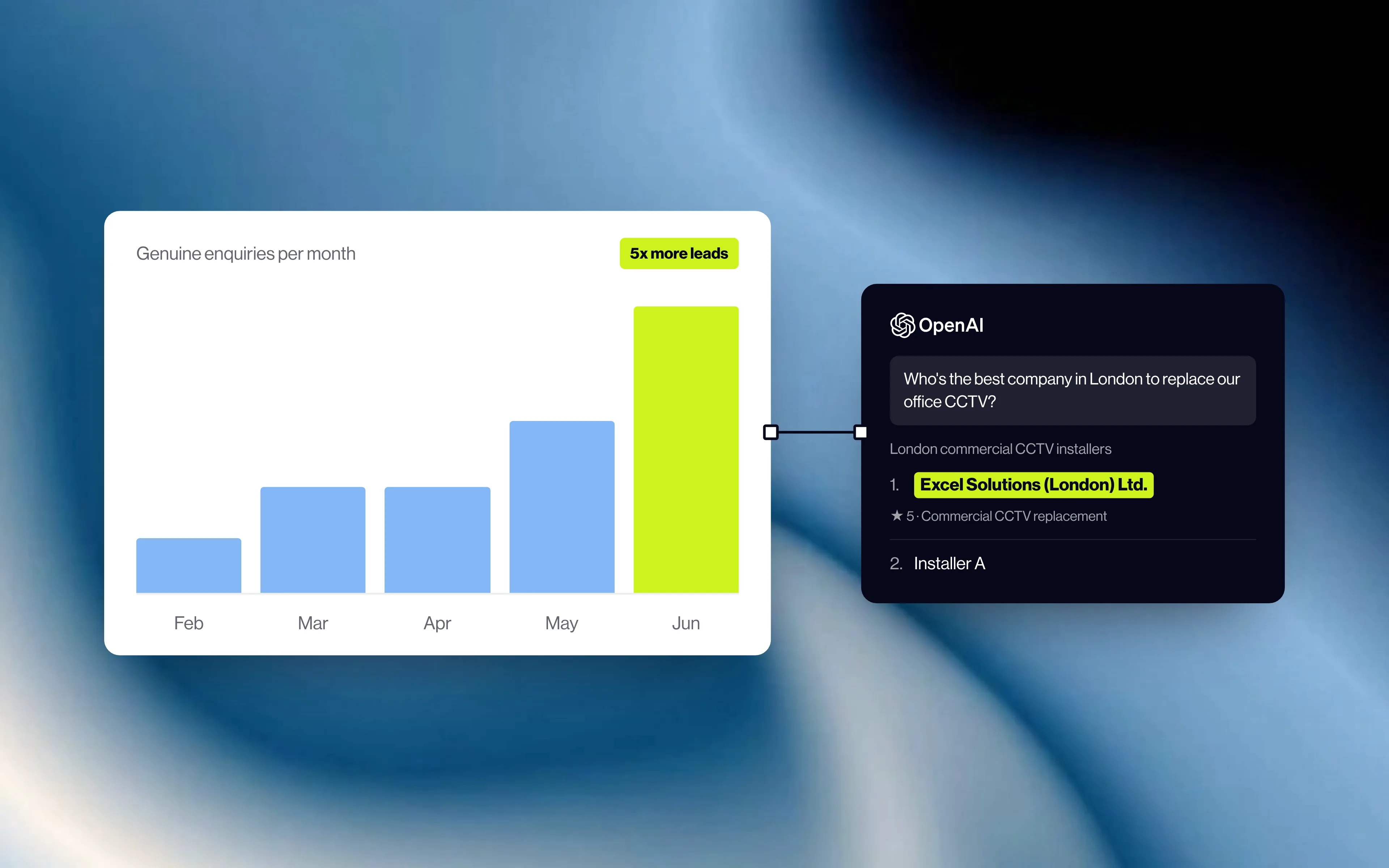
Five times more inbound leads through AI search in five months.

Double the inbound leads within six months.
Most founders think of AI search as a content problem. Write better pages, get mentioned on more websites, and AI will start recommending you. That's true, but only once the technical foundations are in place.
AI tools send automated visitors, called crawlers, to read websites. If a crawler is blocked, sees a blank page or can't tell what you do, it moves on to your competitors. Nothing in your analytics shows it happened.
That's why technical SEO is the first thing we fix for every client. It's the difference between your expertise being read and quoted, and it being ignored.
If your text only loads with JavaScript, many AI crawlers see an almost empty page, however good your website looks.
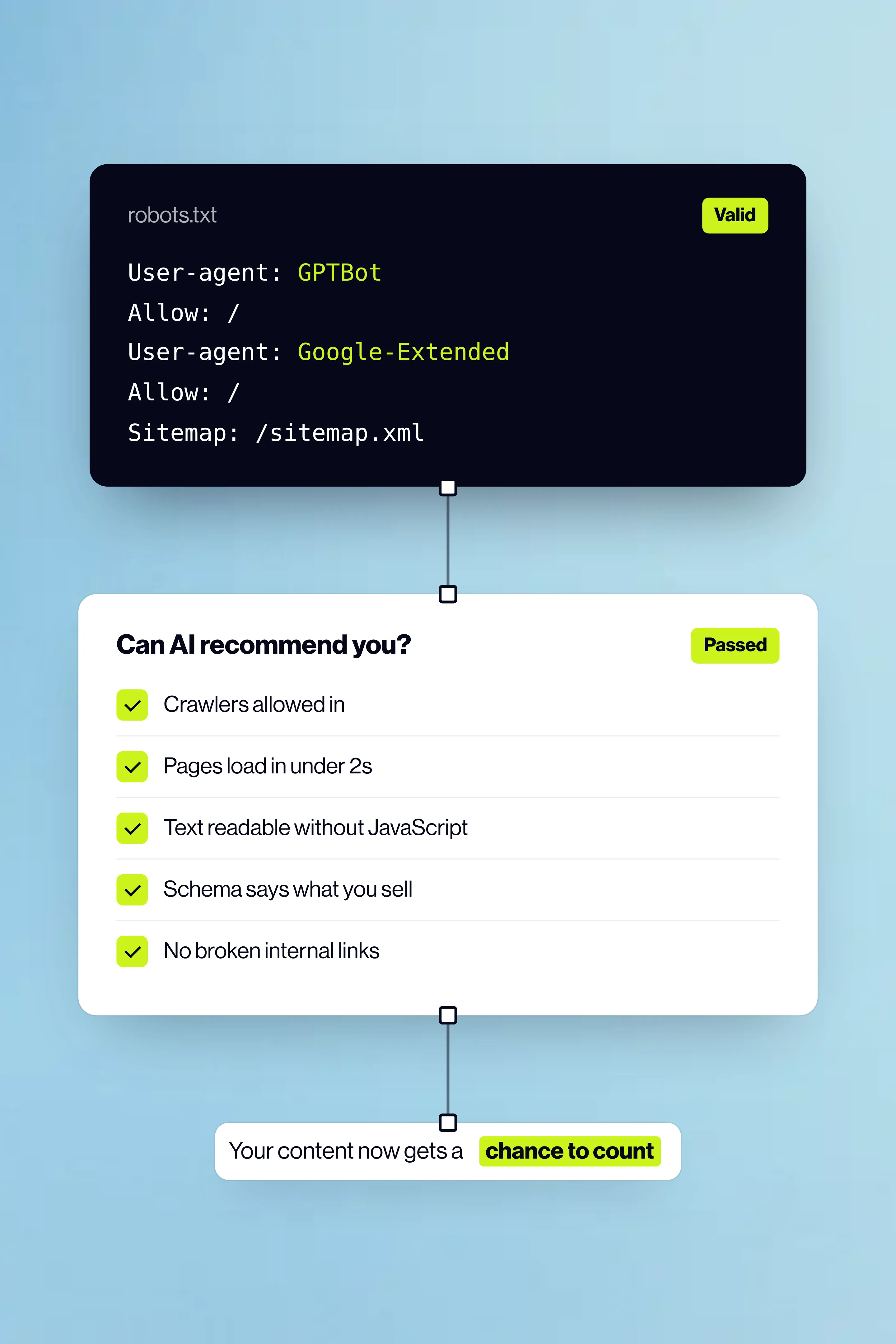
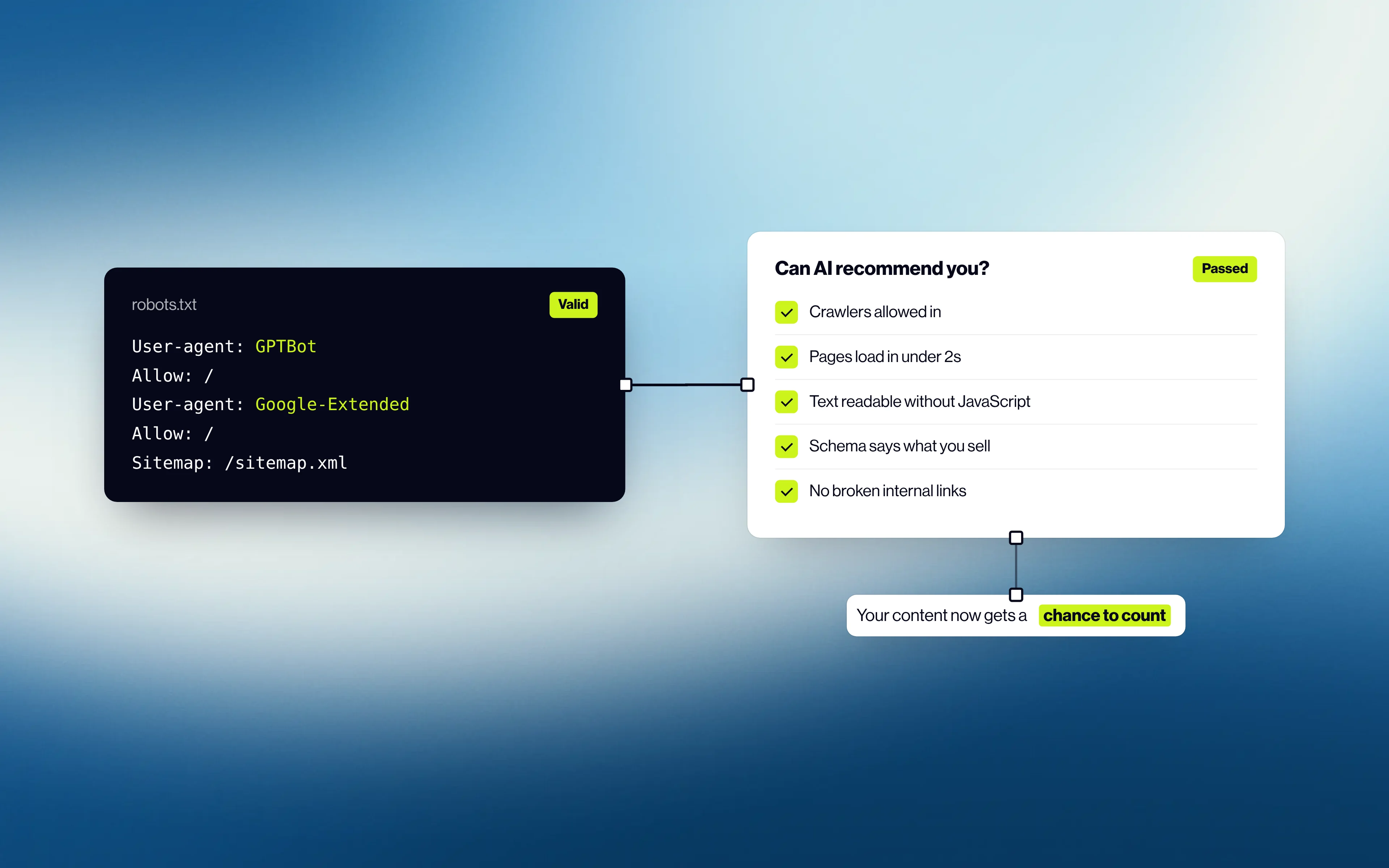
Each of these is a check AI tools make, often without you knowing. Together they decide whether your website is part of the conversation.
What it is: a small file on your website, called robots.txt, that tells automated visitors which pages they're allowed to read. AI tools have their own crawlers, such as GPTBot for ChatGPT, ClaudeBot for Claude and PerplexityBot for Perplexity.
Why it matters: if your robots.txt blocks these crawlers, often by accident, those AI tools can't read your website and can't cite it.
What it is: the security settings on your hosting or website platform that block unwanted automated traffic.
Why it matters: some security tools now block AI crawlers by default. Your robots.txt can say "come in" while your firewall quietly says "no", and the result is the same: AI never sees your pages.
What it is: how your website loads its text. Many modern websites build the page in the visitor's browser using JavaScript, rather than sending the finished text straight away.
Why it matters: many AI crawlers don't run JavaScript. If your text only appears after JavaScript runs, they may see an almost empty page, however good your content is.
What it is: how quickly your pages load and respond, measured by Google's Core Web Vitals.
Why it matters: slow pages rank lower in Google, which AI Overviews draws on, and frustrate buyers who do click through. Crawlers working through thousands of websites also favour pages that load quickly and reliably.
What it is: making sure every important page can be found and stored by search engines, using a sitemap, working links, sensible redirects and the right page settings.
Why it matters: a page that isn't indexed by Google won't appear in Google AI Overviews, and broken links or redirect chains stop crawlers reaching your best content.
What it is: how your pages are organised and linked together, from your main topic pages down to the detailed pages beneath them.
Why it matters: a clear structure shows Google and AI which subjects you're an authority on. It's the technical backbone of the topical authority we build with your content.
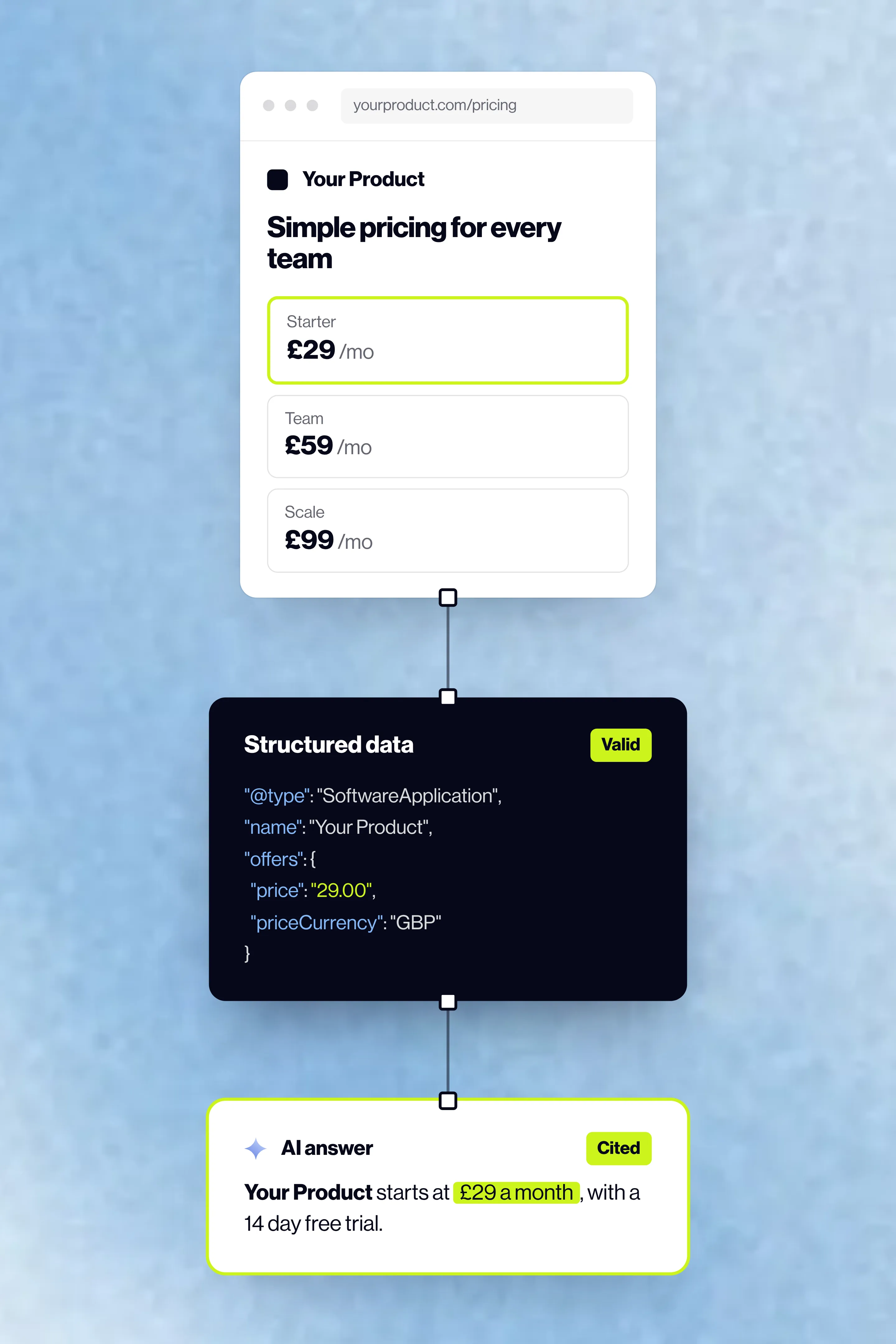
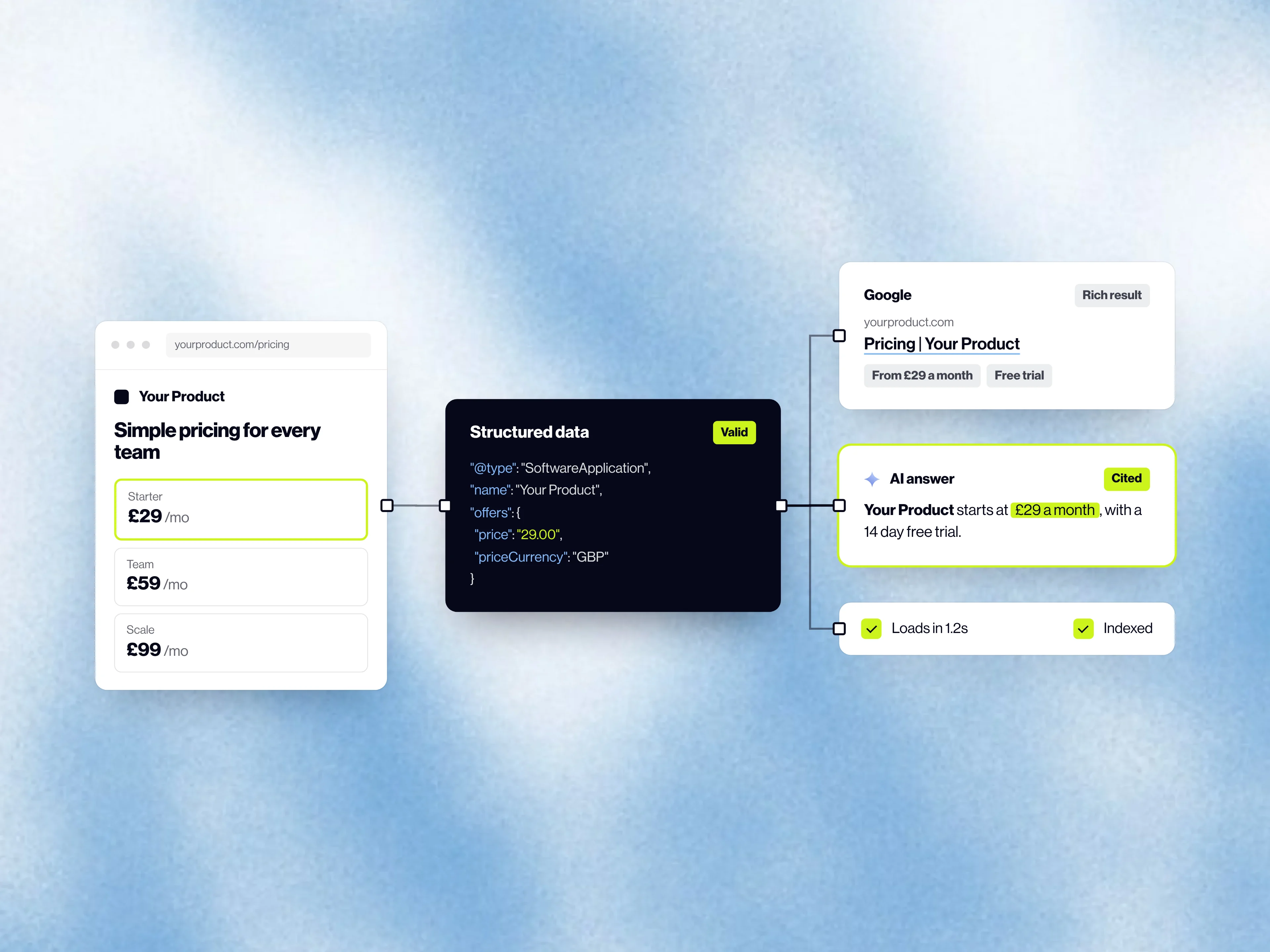
What it is: labels hidden in your website's code that describe your business in a format machines understand: who you are, what you sell, who you serve, and the answers to common questions.
Why it matters: schema removes the guesswork. It helps AI describe your business accurately instead of piecing it together, and getting it wrong.
What it is: using the same business name, description and details on your website, LinkedIn, review sites and directories, and linking them together in your schema.
Why it matters: AI checks your website against other sources. When the details match everywhere, AI can be confident it's talking about the right business, and trusts you more.
None of these show up in a normal website check, and every one of them can keep a good business out of AI answers.
A security setting or an old robots.txt rule turns AI tools away, so the website is invisible to them however strong the content is.
The text loads with JavaScript, so buyers see a polished page while many AI crawlers see very little at all.
With no schema and inconsistent details across the web, AI guesses what the business does, and buyers hear the wrong story.
Technical SEO is the first thing we do when we join your team, because your content and authority work only turns into leads once AI can reach and understand your website.
We look at your website the way Google and AI crawlers do, covering every part on this page, and find what's stopping them.
We make most fixes ourselves. Where your developer is needed, we give them a clear, ranked list of what to change and why.
Websites change, and so do AI crawlers. We monitor your website every month so new problems are caught before they cost you visibility.
It's the work of making sure AI tools like ChatGPT, Gemini, Claude, Perplexity and Google AI Overviews can access, read and understand your website. It covers crawler access, readable pages, speed, indexing, site structure, schema and consistent business details.
It builds on it. Everything that helps Google still matters, but AI adds new checks, such as whether AI crawlers are allowed in, whether they can read pages without JavaScript, and whether your schema describes your business clearly.
For most B2B and SaaS startups, no. If AI tools can't read your website, they can't recommend you to buyers. There are cases where blocking makes sense, and we'll talk you through them, but for growth, being readable usually wins.
llms.txt is a proposed file that summarises your website for AI tools. The major AI platforms haven't confirmed they use it, so we treat it as a nice extra, not a priority.
Not always. We can make most fixes ourselves. Where your developer is needed, we give them a clear, ranked list so the work is quick and nothing is guesswork.
Most key fixes are live within the first month. After that, we monitor your website every month so it stays readable as it changes.
Your free AI visibility audit includes a technical check. You'll see whether AI tools can reach and understand your website, what's getting in their way, and what to fix first to start winning more leads from AI search.